
What we do
Addressable and conventional fire detection panels
In addressable systems every detector and module appears on the panel with its own address, so the exact room or zone of a fire is known immediately. Conventional systems work by zone and are an economical choice for small buildings. The panel is selected by building size, loop capacity, network connection and standby battery time, and devices are chosen to the EN 54 series. After installation all addresses are programmed and the zone plan is delivered in writing.
Smoke, heat and multi detectors, call points, sirens and strobes
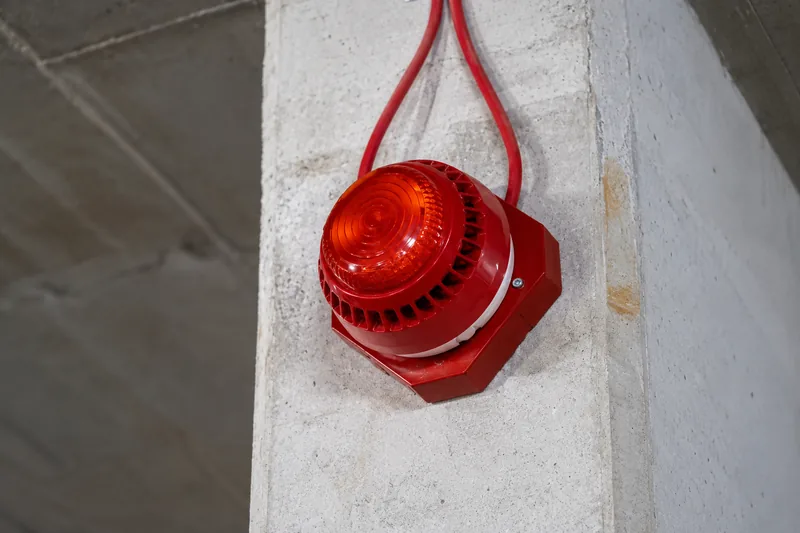
Smoke detectors give early warning, heat detectors suit kitchens and boiler rooms where smoke is normal, and multi-sensor detectors reduce false alarms. Manual call points allow alarms along escape routes, while sirens and strobes also alert people with hearing or sight impairments. Placement considers ceiling height, air movement and use of the space, and wiring uses fire-resistant screened cable.
Integration of wet alarm valves and flow switches with the panel through monitoring modules
The wet alarm valve and flow switches of a sprinkler system are connected to the fire panel through monitoring modules, so water flow, valve closure or pressure drop appears as a separate alarm. Because one panel monitors both detection and suppression, responders see the type and location of an event on a single screen. Each input is tested individually during commissioning.
Lift, ventilation and door-holder control
Scenarios such as recalling lifts to the ground floor, stopping ventilation and air-conditioning units or starting smoke extraction, and releasing magnetic door holders are carried out through the panel's output relays. A cause-and-effect matrix is prepared for each scenario and tested with a real trigger at commissioning, so an alarm becomes an automatic action that brings the building to a safe state.
Assessment and recommissioning of out-of-service or faulty existing systems
Existing systems that do not work, are incomplete or have been disabled are first inspected on site; faulty detectors, broken lines and obsolete panels are reported. Whether the existing cabling can be reused is established by measurement, and panels and detectors are renewed where necessary to bring the system back into service. A written status report and test record are provided at the end.
Periodic maintenance and testing
Fire systems must go through maintenance and functional testing at regular intervals. A service visit covers detector cleaning and sensitivity checks, battery and charger measurements, testing of sirens and call points, and verification of control scenarios. A report is issued after each visit, with faults and shortcomings notified in order of priority. A planned maintenance contract keeps the system ready all year.
Works are carried out in accordance with the Turkish Regulation on Fire Protection of Buildings and the TS EN 54 series of standards.